
Bringing the Southern Ocean into sync
Antarctica and the Southern Ocean are changing fast and much of that change is not adequately observed. SYNCHRONY will establish an internationally coordinated and synchronised observing system across the Southern Ocean and Antarctica’s coastal regions as a European contribution to Antarctica InSync.
Connecting observations and scientific knowledge
Harsh weather, extensive sea ice and Antarctica’s remoteness make scientific measurements difficult. As a result, major questions remain about how quickly the Southern Ocean is changing and what these changes mean for the global climate, sea level and marine biodiversity.
SYNCHRONY addresses these knowledge gaps by combining observations, scientific expertise and international research efforts. Because the ocean, sea ice, ice shelves, atmosphere and marine ecosystems are closely linked, the project studies them together rather than in isolation.
Researchers will identify gaps in existing observations, improve monitoring strategies and coordinate measurements across different scientific disciplines. Data from research vessels, autonomous instruments and satellites will be combined with historical records and computer models to build a clearer picture of how the environment is changing.
The project will also improve how scientific data are organised, shared and translated into climate and biodiversity indicators – measures of environmental change – that can inform research, environmental protection and policymaking.
Working closely with international partners and initiatives such as the Southern Ocean Observing System (SOOS), the Scientific Committee on Antarctic Research (SCAR) and Antarctica InSync, SYNCHRONY will help establish a coordinated, long-term approach to monitoring Antarctica and the Southern Ocean

Understanding changes in the Southern Ocean
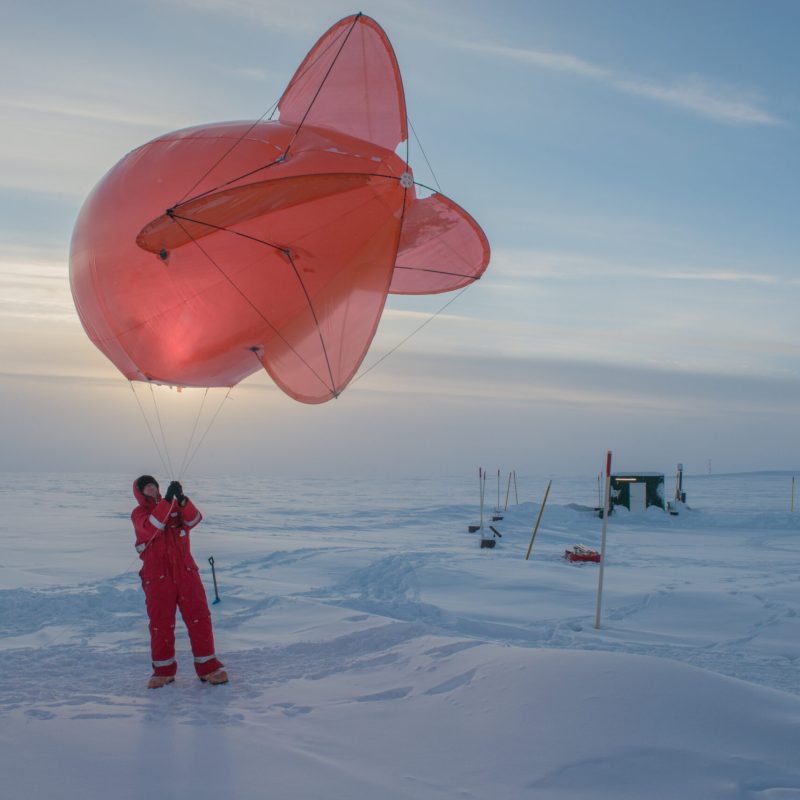
The Southern Ocean is undergoing significant environmental changes. Rising ocean temperatures, melting ice and shifts in ocean chemistry affect marine ecosystems and influence the global climate. SYNCHRONY organises its research around five cross-cutting scientific themes, which link activities across the project’s work packages.
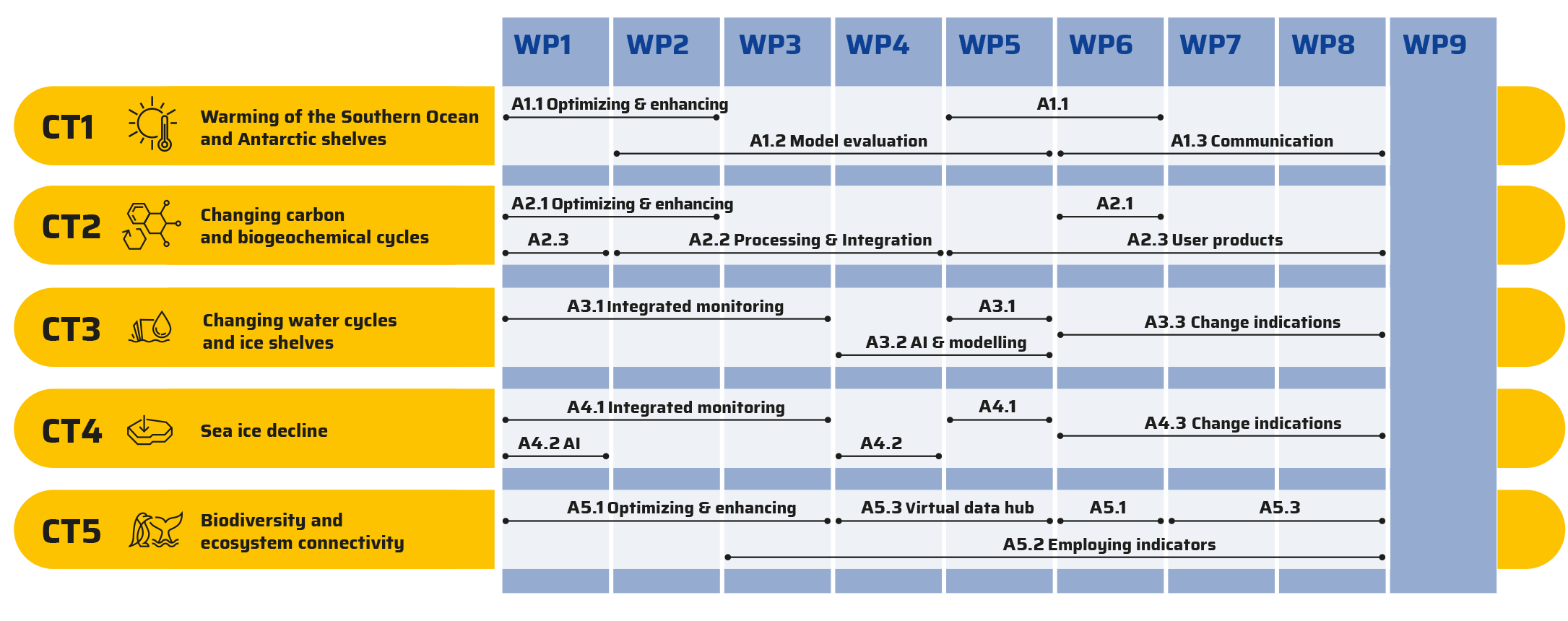
Warming of the Southern Ocean and Antarctic continental shelf seas (CT1)
The Southern Ocean absorbs a substantial share of the excess heat trapped in the Earth system by increasing greenhouse gas emissions. This heat affects ocean circulation, Antarctic ice shelves and marine ecosystems. SYNCHRONY will improve how ocean heat uptake is observed and use the results to test ocean and climate models, with the aim of reducing uncertainty about how the Southern Ocean will warm in future.
Changing carbon and biogeochemical cycles (CT2)
The Southern Ocean takes up a substantial share of the carbon dioxide emitted by human activities. This ocean uptake slows global warming. How this uptake will change as the region warms remains uncertain. Changes in ocean chemistry, oxygen and nutrient availability also affect marine life. SYNCHRONY will bring together existing and new measurements and produce maps of carbon dioxide exchange between ocean and atmosphere to assess carbon uptake, ocean acidification – the decrease in seawater pH – and their consequences for marine ecosystems.
Changing water cycle and ice shelves (CT3)
Melting ice shelves and precipitation add freshwater to the Southern Ocean, while sea ice formation and melting redistribute freshwater and salt. These processes change the oceans’s layering, known as stratification, and circulation, which in turn can affect the amount of heat reaching ice shelves and their stability. Ice shelves help hold back glaciers on land; their thinning or loss can accelerate the flow of land ice into the ocean, contributing to global sea level rise. SYNCHRONY will investigate these interactions using ocean measurements, satellite observations, modelling and machine learning.
Sea ice decline (CT4)
Since 2015, Antarctic sea ice cover has experienced sharp declines, alongside substantial year-to-year variability, possibly signalling a lasting shift. These changes affect the exchange of heat between the ocean and atmosphere and threaten species and ecosystems that depend on sea ice. SYNCHRONY will examine long-term records and new observations to better understand the causes and consequences of sea ice decline.
Biodiversity and ecosystem connectivity (CT5)
The Southern Ocean supports diverse marine life, from microscopic plankton to penguins, seals and whales. Climate change and human activities are placing increasing pressure on these ecosystems. SYNCHRONY will improve biodiversity monitoring – including the use of sound recordings, images and sensors carried by animals, with automated methods to help collect or analyse the data – and develop indicators to assess changes in marine life and support conservation and sustainable management.
Connecting the themes
The five themes draw on expertise from different scientific disciplines. Their outputs will contribute to the core of the Southern Ocean Cookbook, an open-access guide to shared observation methods, standards and good practices for future Southern Ocean research.
Coordinating observations across the Southern Ocean
Research expeditions to the Southern Ocean are costly and logistically challenging, and many areas remain poorly observed, particularly during the Antarctic winter.
SYNCHRONY aims to improve the coverage and coordination of Southern Ocean observations by strengthening existing research networks and making better use of available infrastructure, for example by improving and using the POLARDEX platform to share expedition plans and identify opportunities to coordinate logistics and ship use.
The project will also assess where observations are missing and how instruments can be deployed more effectively. Modelling and artificial intelligence will support the design of more efficient observing networks
Combining observation technologies
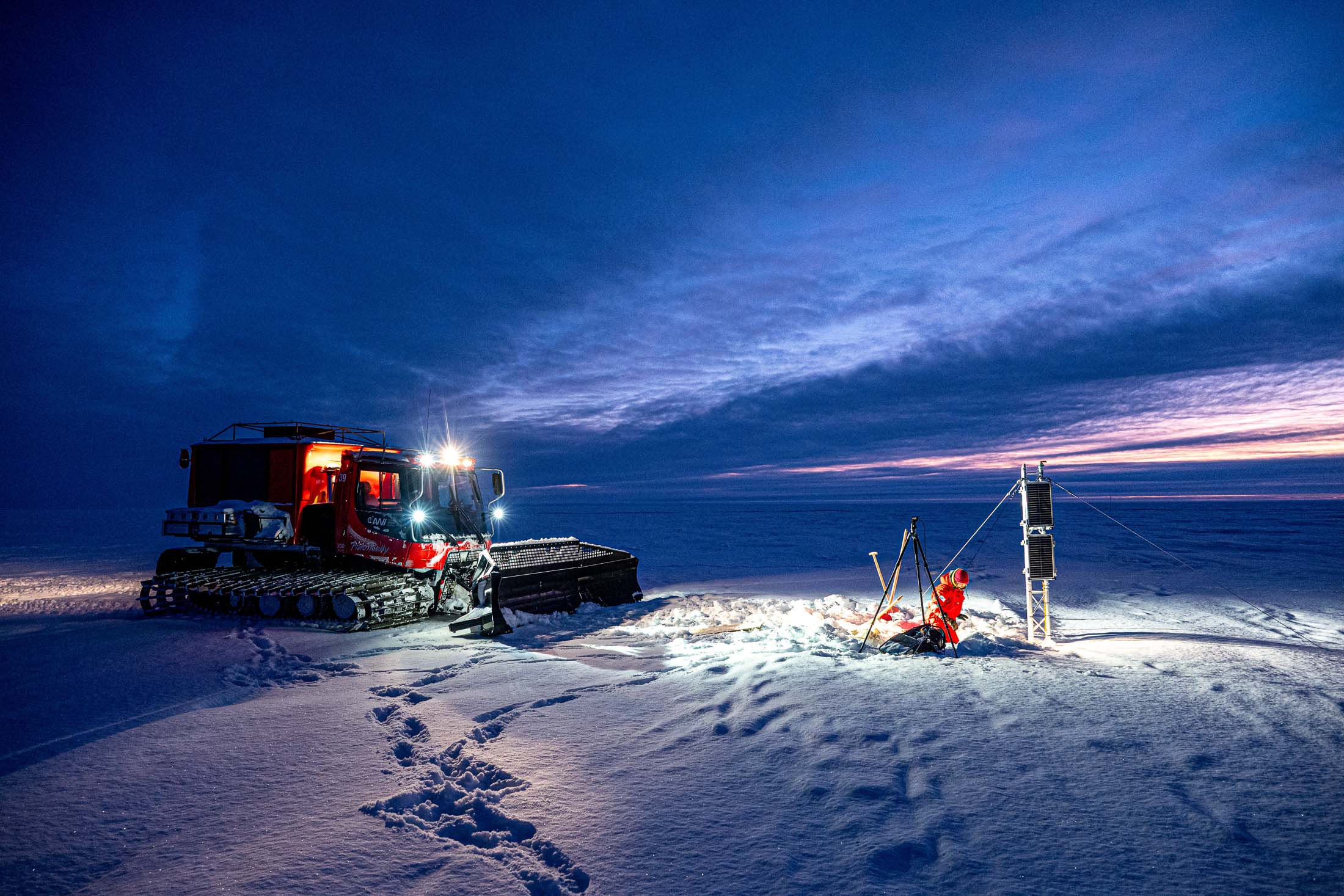
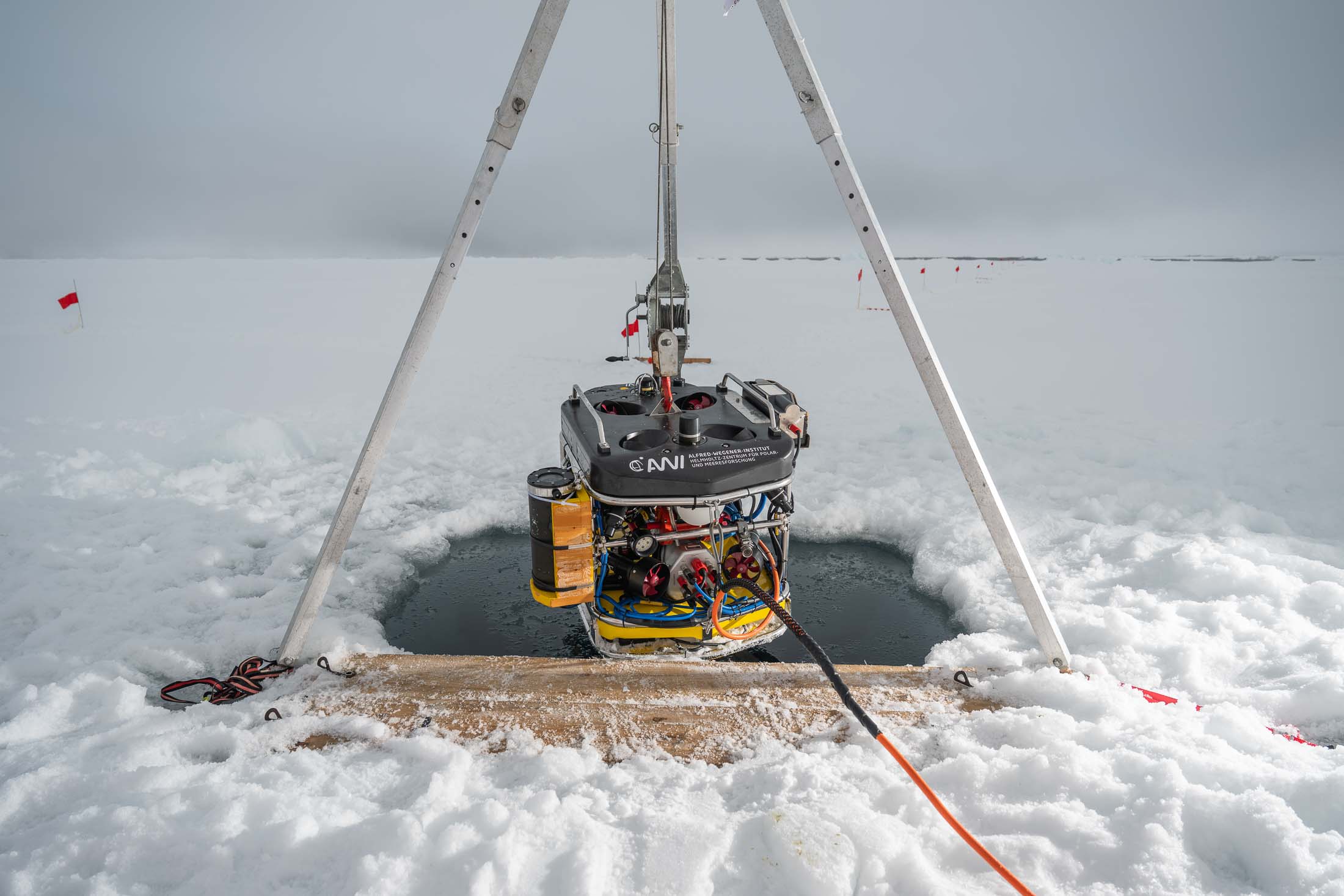
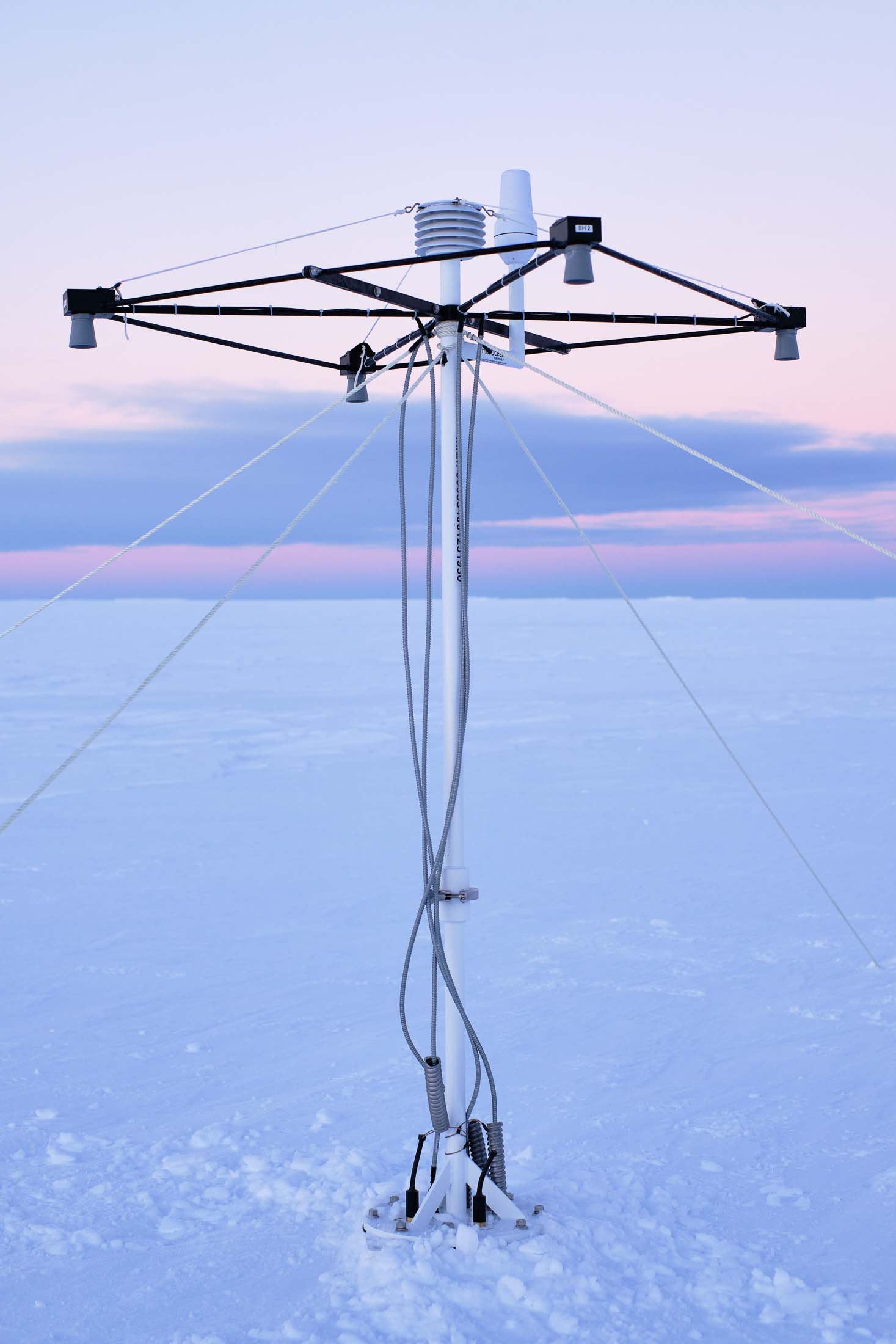
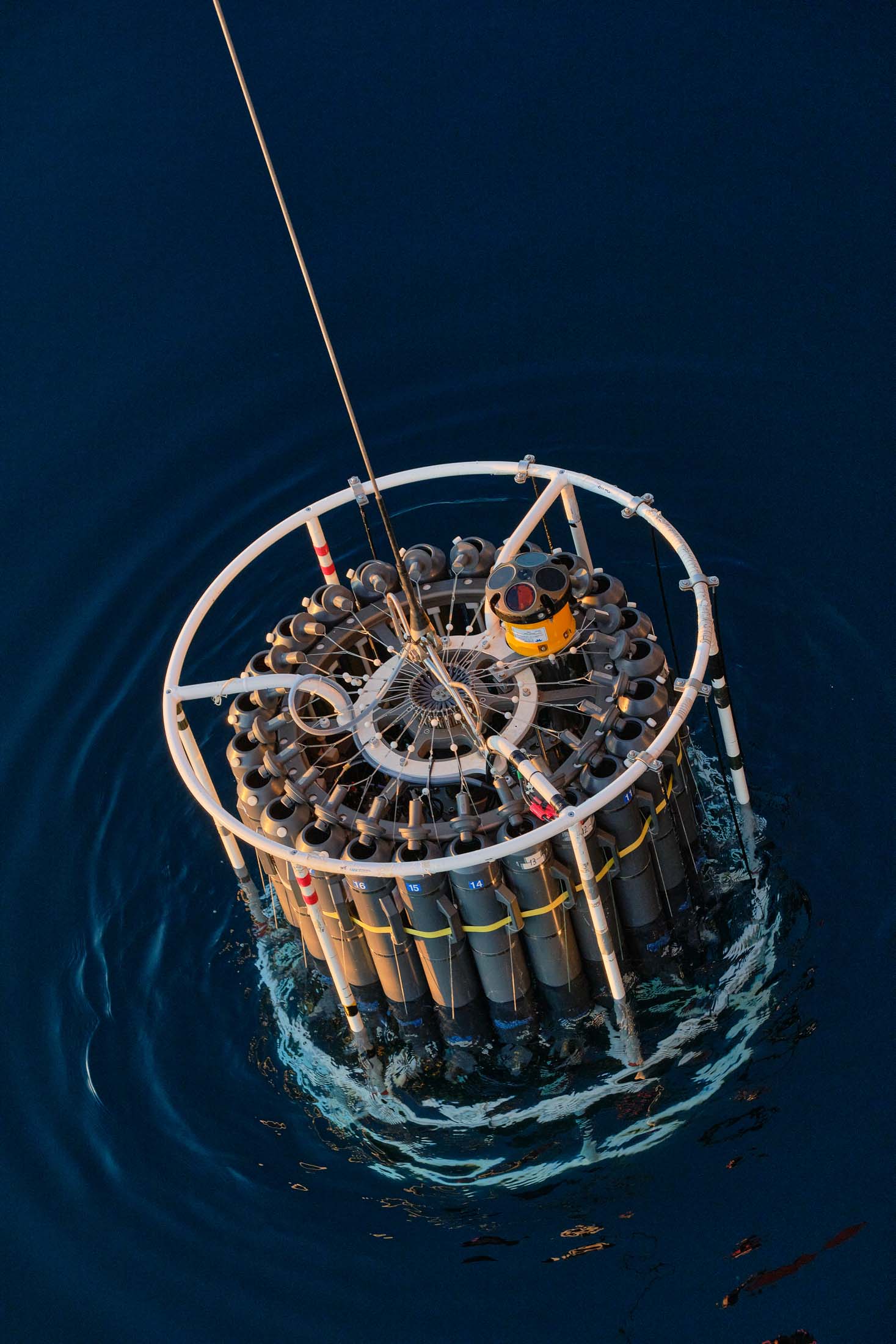
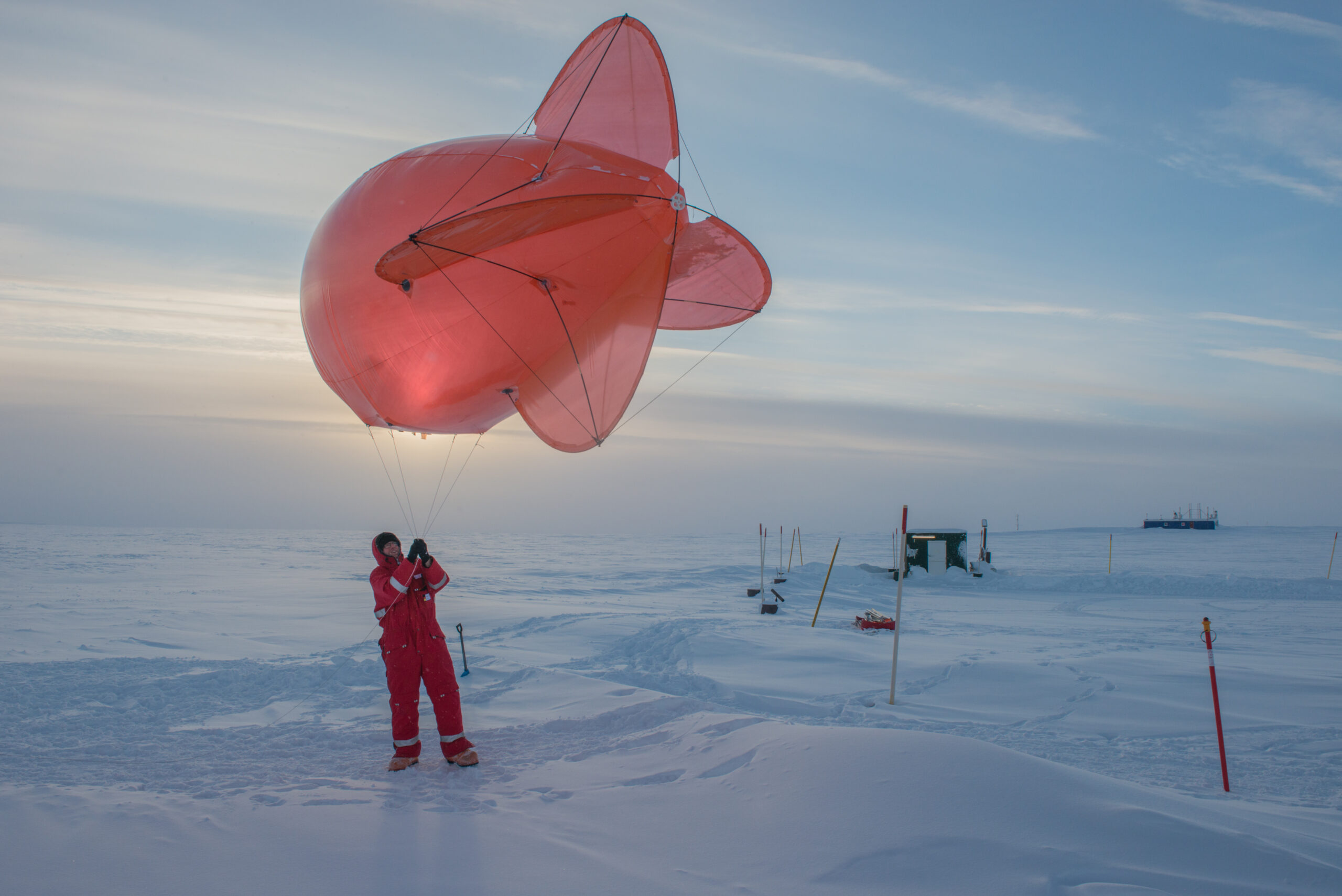
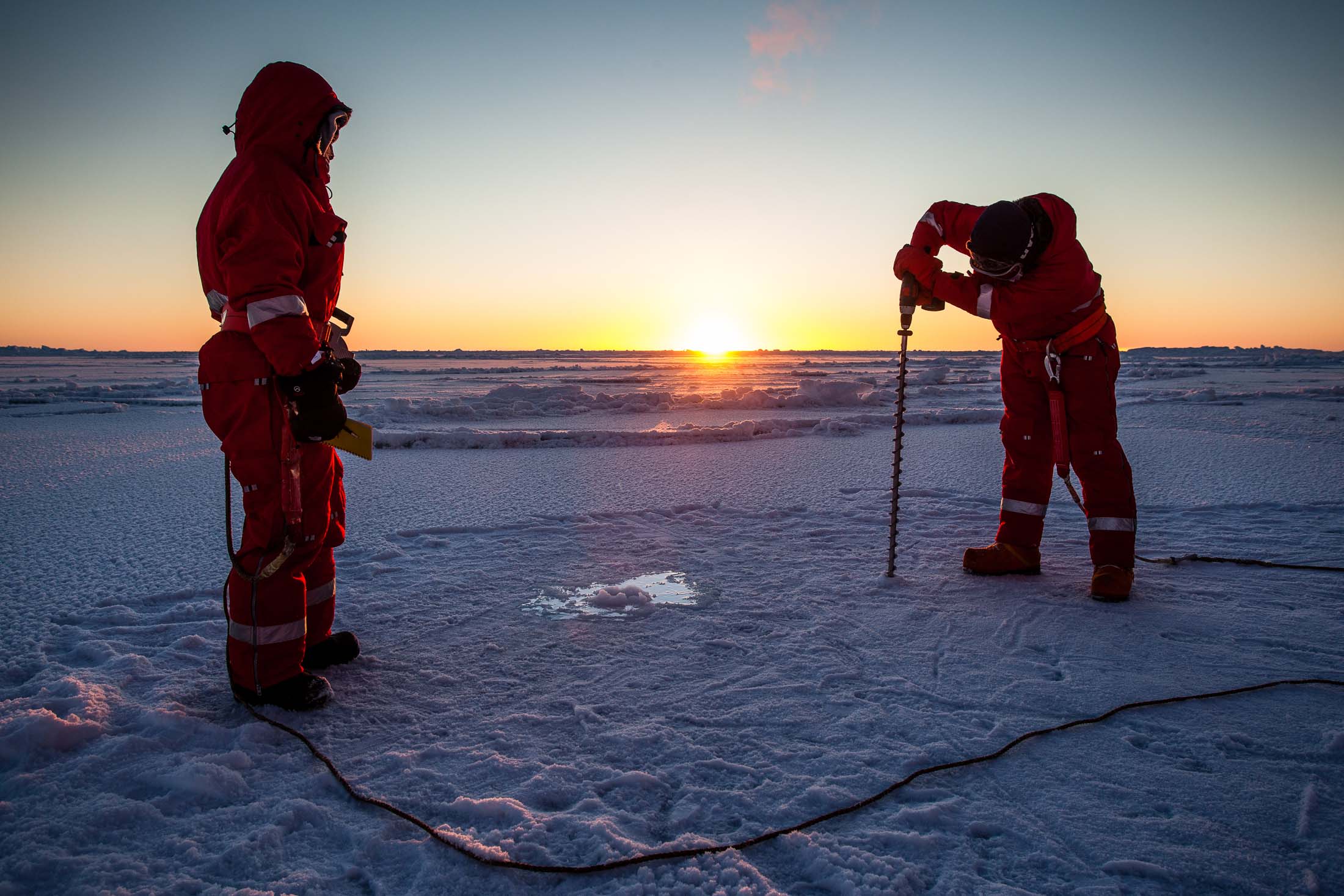
The project combines measurements from research vessels, autonomous instruments, moored sensors, sea ice buoys and satellites. Each provides different information: ships collect detailed and accurate measurements, autonomous instruments monitor remote areas over longer periods, and satellites offer a broader view of changing environmental conditions.

Identifying essential measurements
SYNCHRONY will identify a set of Shared Essential Polar Variables (SEPVs) – key environment properties needed to monitor environmental change in polar regions. Their selection will build on existing international frameworks and agreed with Arctic partners, so that both polar regions are measured in comparable ways.
Improving coordination and data access
During Antarctica InSync (2027–2029), SYNCHRONY will work with SOOS, SCAR and other partners to align research activities and share infrastructure.
The project will also make environmental data easier to find, access and combine. By improving data standards and connections to platforms such as SOOSmap, EMODnet and Copernicus, SYNCHRONY will support more consistent and accessible long-term monitoring of the Southern Ocean.
Making better use of Southern Ocean observations
Even with advanced observing technologies, scientists cannot measure every part of the vast Southern Ocean continuously. Computer models and artificial intelligence (AI) help address these gaps and make better use of the available data.
SYNCHRONY will combine direct measurements, satellite observations, numerical models and AI-based methods to improve our understanding of environmental changes in the Southern Ocean.
Improving ocean and climate models
Computer models simulate processes such as ocean circulation, heat transport, sea ice formation and carbon exchange. However, limited observations and complex interactions between the ocean, ice and atmosphere make the Southern Ocean particularly difficult to represent accurately.
SYNCHRONY will use observational data to evaluate and help improve ocean and climate models, helping researchers better understand ongoing changes and reduce uncertainties in climate projections.
Applying artificial intelligence
AI and machine learning can identify patterns in large datasets and help estimate environmental conditions where direct observations are missing.
SYNCHRONY will use these methods to estimate missing values in datasets describing ocean properties, sea ice and the exchange of carbon dioxide between ocean and atmosphere. The project will also use explainable AI-methods, which help researchers interpret the factors influencing a model’s result, to support decisions about and where and when to take measurements.
Improving the observing network
Modelling and AI will also help determine where and when new observations are most useful. By analysing gaps in existing measurements and testing different monitoring strategies, researchers can improve the placement of instruments, plan ship routes and make more efficient use of research infrastructure.
Supporting research and decision-making
Combining observations, models and AI will support the development of improved environmental data products and indicators of climate and biodiversity change.
These results will contribute to services such as Copernicus and provide scientific information for climate research, environmental monitoring and Antarctic conservation and management.
You didn‘t find what you are looking for or have any questions?
Please, contact our project or communication managers